Raise Alarm
First actionMake the incident visible quickly. Confirm location, incident type, immediate danger and emergency service need.
Hold / Strata Logistics / Emergency Response
Point-of-need response for alarm raising, routes, first aid, spills, vehicle incidents and live restrictions.
Immediate ResponseKey operational guidance can be provided in approved workplace languages so staff, contractors and visitors can understand instructions at the point of need.
Safety note: Safety-critical wording should be controlled and approved before use.
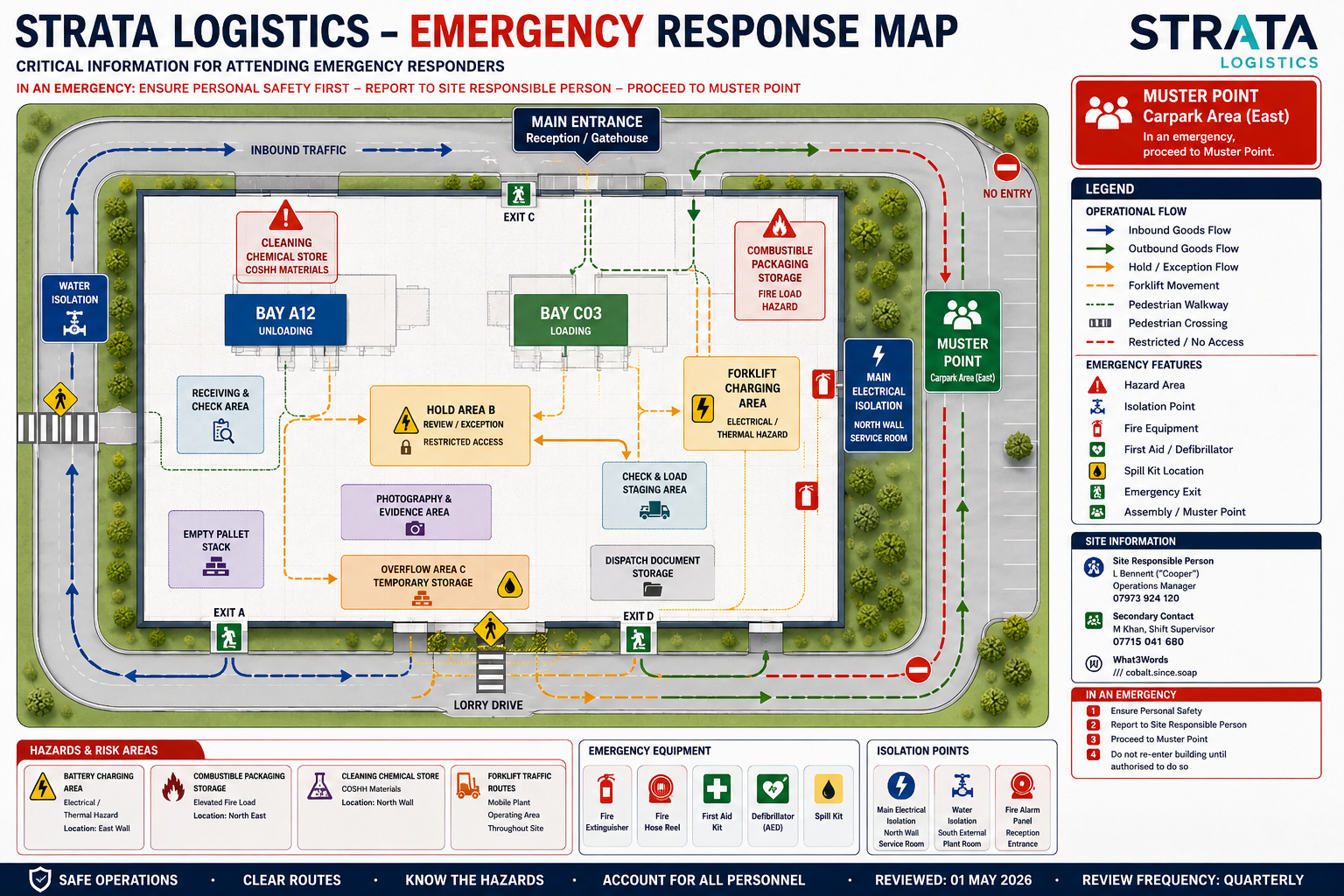
Open this map to view evacuation routes, hazard zones, muster arrangements and emergency access before taking action.
Make the incident visible quickly. Confirm location, incident type, immediate danger and emergency service need.
Fire exits, evacuation routes, dispatch lanes and emergency service access should remain clear and visible.
Confirm casualty location, injury type, access route and whether first aiders or emergency services are required.
Battery, chemical, oil, hydraulic or cleaning-material spills should be reported quickly and contained only if safe.
Forklift collision, vehicle strike, trapped route or battery charging incident requires immediate escalation.
Site Responsible Person: L Bennett, operationally known as Cooper. Secondary contact: M Khan, Shift Supervisor.
Temporary closures, forklift route restrictions, battery charging hazards and dispatch diversions should remain visible.
Emergency situations do not always match the plan. Keep a route for reporting what the system did not predict.
Alarm route opened. Confirm incident location, type, immediate danger, evacuation need and emergency service requirement.
Blocked route reported. Identify affected exit, dispatch lane, emergency access point or alternate route.
First aid response opened. Confirm casualty location, injury type and access route.
Spill or leak response opened. Contain only if safe and trained; protect routes and drains where relevant.
Forklift or vehicle incident reported. Confirm plant location, operator accountability and route impact.
Emergency contact escalation opened for site responsible person, shift supervisor or attending responders.
Live restriction recorded. Keep the restriction visible until emergency response, route clearance or supervisor release.
Capture emergency context that does not fit the standard response routes.
Language support placeholder. Approved translated guidance would appear here in a live Hold deployment.